Financial Services case study

LAAD Compliance Report

Centralizing sensitive regulatory data into a secure, auditable .NET reporting engine for the banking sector.

Client context

Financial Services

Current phase

Production

Core stack

.NET Core / SQL Server / Razor Pages

Build snapshot

The commercial frame around the work

Each case here is structured as an operating system problem first, not a gallery item. The details below show delivery state, business context and the level of effort behind the solution.

Timeline Delivered (2025)
Phase Production
Sector Finserv
Est. Budget EUR 80k - EUR 100k
From pressure to system

What had to change for this project to work

The narrative is simple: identify the operational drag, then design a system that removes fragility without adding more process theatre.

Challenge

The pressure we inherited

Regulatory reporting in banking often involves fragile Excel spreadsheets and manual data extraction from core systems. This led to high operational risk, lack of audit trails, and slow turnaround times for urgent compliance requests from the Central Bank.

Solution

The operating model we shipped

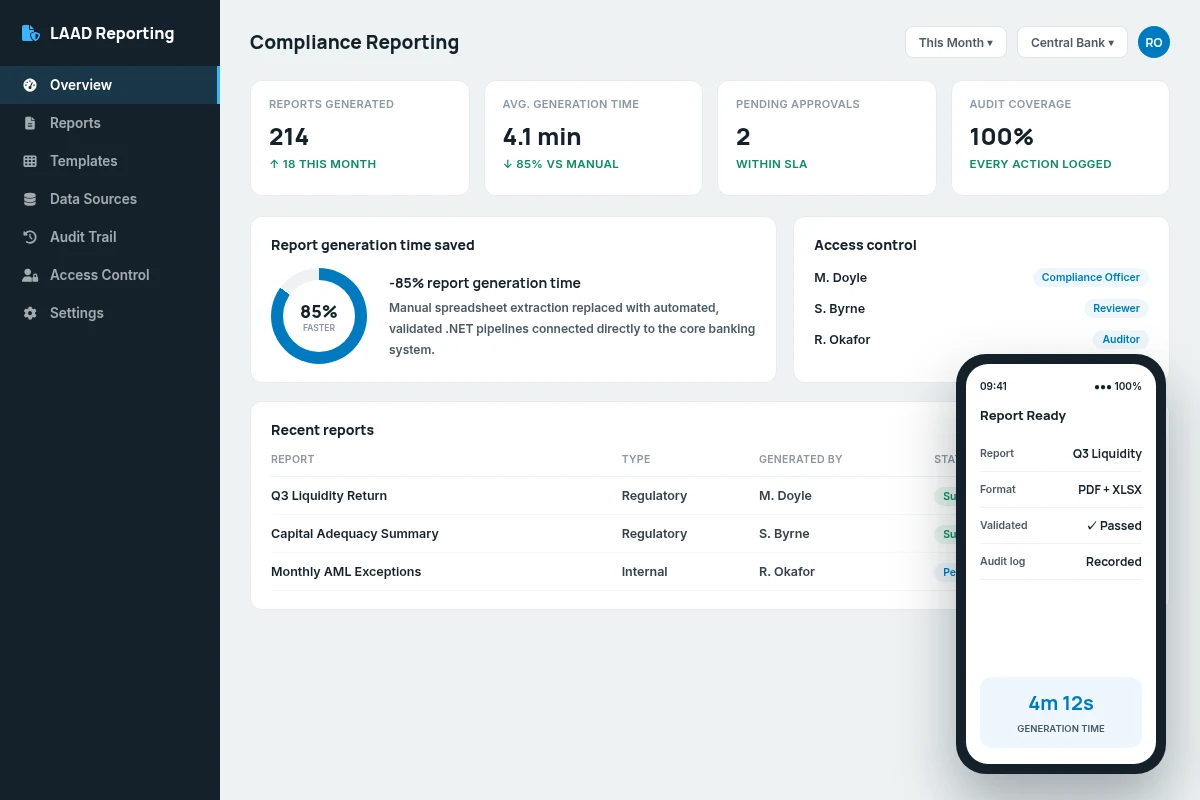
We built a robust web application using .NET Core that connects securely to the core banking system. It automates the extraction, validation, and layout of complex reports. The system enforces Role-Based Access Control (RBAC) to ensure only authorized officers can generate sensitive documents.

Built into the system

Capabilities that carried the case

Instead of listing generic modules, this section shows the specific controls, workflows and integration moves that made the delivery meaningful.

Traceability

Every report generation is logged. Who generated it, when, and with what parameters.

Validation

Automated rules check data consistency before the report is even created, preventing errors.

Security

Integrated with Active Directory for Single Sign-On (SSO) and precise permission management.

Output

Generates pixel-perfect PDFs and Excel exports formatted strictly to regulatory standards.

Impact and evolution

What changed and where it can go next

The strongest case studies are not only about shipping. They show measurable operational movement and a platform shape that can keep compounding value after launch.

Outcomes

What improved after delivery

LAAD Compliance Report created clearer control over execution, speed and visibility for the client team operating it.

  • Eliminated manual spreadsheet errors in regulatory submissions.
  • Reduced report generation time by 85%.
  • Achieved full audit compliance for data access and modification.
Stack and next move

How the platform is set up to evolve

The implementation leans on production-ready components that fit Finserv requirements without overbuilding the system.

.NET Core SQL Server Razor Pages Role-based Access PDF Library
Next move

Integration with additional regulatory bodies and automated submission APIs.

More case studies

Explore adjacent delivery examples

Browse other projects across automation, cloud, payments, audit and operational systems.

Need this level of delivery for your own operating problem?

We can help shape the brief, pressure-test the architecture and turn a messy workflow into a system your team can actually run with confidence.